
Hand Plane Blade Compatibility Guide
Search by plane brand, model, or blade width to find your exact match.
Every plane owner eventually asks the same question: what blade fits my plane? This covers exactly which IBC blade fits your specific plane, whether you need the blade alone or a matched set with the chip breaker, and how to install it.
Two questions determine the right blade: thickness first, then width. Get the thickness family right and the width follows from your plane's number. Hand planes equipped with blades contracted to IBC have won “Tool of the Year” awards, and the compatibility data below reflects IBC's own replacement blade line.
Already know your plane number? Skip ahead and use the Hand Plane Blade Finder for an instant match.
What a plane blade actually does (and why thickness matters)
A plane iron does two jobs: it cuts the wood, and, working together with the chip breaker (cap iron) mounted just above it, it controls how the shaving curls and breaks, which is what keeps the cut clean and chatter-free. A thin, unsupported blade flexes slightly under cutting pressure, which shows up as chatter: a faint rippled texture on the cut surface, especially in figured or interlocked grain.
Thicker blades resist that flex. That's the entire rationale behind the premium aftermarket blade market: a thicker iron, properly bedded, cuts more cleanly and holds its edge geometry better under load than the thin blades many planes originally shipped with.
Two blade thicknesses dominate the category. Vintage and reissued Bailey-pattern planes were designed around a thinner iron, roughly 0.095 inch. Premium aftermarket-style planes, built from the ground up around a thicker iron, use blades closer to 0.140 inch, with frogs and lever caps sized to match. That difference is why “plane blade” isn't a single generic part. The plane's frog and lever cap are built for one thickness family, and the wrong one won't bed properly.
The chip breaker matters just as much as the blade. A worn, warped, or poorly-seated chip breaker undermines even a premium blade's performance, which is why IBC sells matched sets, not just blades.
On steel: IBC blades are AISI High Vanadium A2 tool steel, hardened to 60–62 Rc. Some premium plane-blade makers use O1, and a few use proprietary powder-metallurgy steels. A2 trades a small amount of sharpening ease for meaningfully longer edge life between sharpenings, which matters more the more you plane.
0.095 inch vs. 0.140 inch: which IBC line do I need?
This is the single most important compatibility decision, and it's determined by your plane, not by preference.
The 0.095 inch line is built for original-spec Stanley and Record planes. It preserves the plane's original adjustment mechanism and works correctly once paired with the matching chip breaker.
The 0.140 inch line is built for planes designed around a thicker iron from the start, including Lie-Nielsen, Qiangsheng, and WoodRiver bench planes. These planes have frogs and lever caps sized specifically for the thicker blade.
Can a 0.140 inch blade go into a vintage Stanley? Not without modification. The frog and lever cap aren't sized for the extra thickness, and forcing the fit risks damaging the plane.
Can a 0.095 inch blade go into a Lie-Nielsen? It will physically fit, but it's a downgrade, giving up the chatter resistance the plane's frog was specifically designed to support.
For a vintage or reissued Stanley or Record plane, use 0.095 inch. For a Lie-Nielsen, Qiangsheng, or WoodRiver plane, use 0.140 inch.


Compatibility table: find your plane, find your blade
The table below is built directly from IBC's confirmed plane-fitment data. Where a matched set includes a chip breaker built with a small threaded tab, that tab lets an older plane's yoke engage IBC's thicker blade. That's why “With Tab” sets are the correct match for Stanley and Record, while the standard (no-tab) matched sets are correct for the modern lines.
Bench plane blades: 0.095 inch line (Stanley & Record)
| Plane | Blade-only SKU | Matched set SKU (“With Tab”) |
|---|---|---|
| Stanley #2 / Record #2 | RBBE-0309 | N/A |
| Stanley #3, #5¼ / Record #3, #5¼ | RBBE-0310 | RBMS-0394 |
| Stanley #4, #5 / Record #4, #5 | RBBE-0311 | RBMS-0395 |
| Stanley #4½, #6, #7 / Record #4½, #6, #7 | RBBE-0312 | RBMS-0396 |
| Stanley #8 / Record #8 | RBBE-0313 | RBMS-0397 |
Bench plane blades: 0.140 inch line (Lie-Nielsen, Qiangsheng, WoodRiver)
| Plane | Blade-only SKU | Matched set SKU | Chip breaker-only SKU |
|---|---|---|---|
| #3 | RBBE-0334 | RBMS-0384 | CBBE-0334 |
| #4, #5 | RBBE-0336 | RBMS-0385 | CBBE-0336 |
| #4½, #5½, #6, #7 | RBBE-0340 | RBMS-0386 | CBBE-0340 |
| #8 | RBBE-0341 | RBMS-0387 | CBBE-0341 |
All three manufacturers (Lie-Nielsen, Qiangsheng, and WoodRiver) share the same fitment within each row.

Compatibility by plane manufacturer
Stanley planes
IBC's 0.095 inch line is built for the classic Bailey-pattern Stanley lineup, #2 through #8, including modern Stanley reissues manufactured to the same original spec. If your plane doesn't appear in the table above (Bedrock-variant frogs, jack planes like the #5¼, jointer variants, scrub planes), check with IBC directly before ordering. Fitment on non-standard variants can differ.
Record planes
Record's planes were built to the same Bailey-pattern lineage as Stanley, which is why Record blades and Stanley blades are interchangeable across IBC's 0.095 inch line, including the block-plane line (see below). Treat “Stanley/Record” as one fitment family, not two separate systems.
Lie-Nielsen planes
Lie-Nielsen builds around the thicker 0.140 inch iron by design, with a frog and lever cap sized specifically for it. IBC's 0.140 inch line is built to that spec.
Qiangsheng and WoodRiver planes
Both are manufactured to compatible specifications with the Lie-Nielsen-pattern thick iron and share the same IBC blade fitment as the Lie-Nielsen line. Minor lever-cap variation exists between individual plane runs, so it's worth confirming the fit on an unfamiliar or older plane before ordering a full matched set.
Should I buy the matched set, the blade alone, or the chip breaker alone?
The matched set is the right default for most plane upgrades. The chip breaker does real work controlling the shaving, and a worn or warped original chip breaker undermines even a great blade. Buying the pair together also guarantees the blade and chip breaker seat against each other properly.
Blade-only makes sense when your existing chip breaker is in good condition, you've measured the fit, and you want to keep the original chip breaker.
Chip breaker-only is the rarer case, useful mainly when the existing blade still performs but the chip breaker is bent, cracked, or rusted past saving.
A matched set typically costs somewhat more than the blade alone, and the difference buys a chip breaker built and matched to the blade rather than paired with whatever came with the plane originally. IBC doesn't sell replacement lever caps; if a lever cap is the actual problem, that's a separate repair.
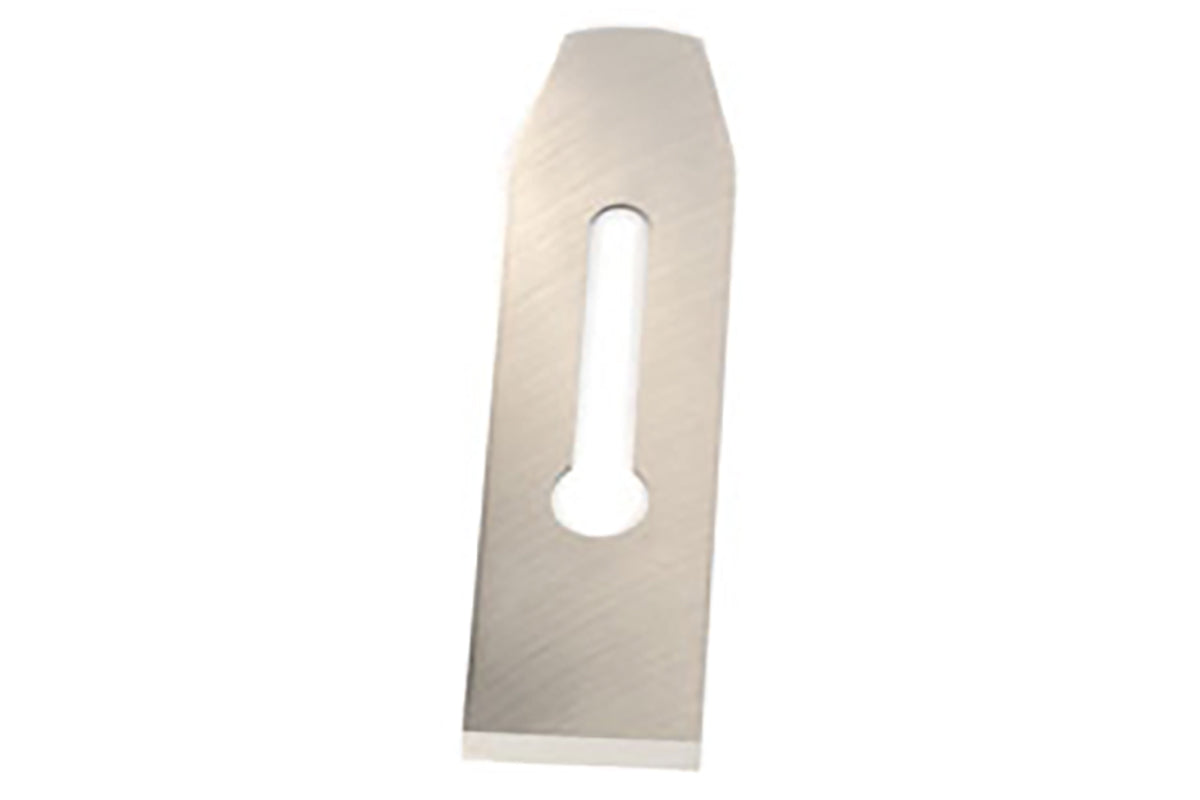
The 2 inch limited-edition blade for #4 and #5
RBMS-0375 is a wider, 2-inch blade for Stanley and Record #4 and #5 planes, part of the 0.095 inch (thin) line and paired with a standard, no-tab chip breaker. It's a limited historical production run and stock is finite. Most readers can skip this section; it exists for the specific case of a #4 or #5 plane modified to take the wider iron.
Block plane blade compatibility (#9½ and #60½)
IBC's block plane blades cover both the standard-angle #9½ and low-angle #60½ profiles, and fit both Stanley and Record block planes.
| Block plane | 3-slot lever cap SKU | 9-slot lever cap SKU |
|---|---|---|
| Stanley/Record #9½ (standard-angle) | RBBL-0318 | RBBL-0320 |
| Stanley/Record #60½ (low-angle) | RBBL-0319 | RBBL-0321 |
Check your plane's lever cap before ordering. 3-slot and 9-slot lever caps use different blades, and the two aren't interchangeable.

Installing your new IBC blade
- What you'll need: a small flathead screwdriver and a soft cloth.
- Remove the existing blade: lift the lever cap, back out the cap screw, and lift the blade and chip breaker assembly out together.
- Inspect the new IBC blade. The back arrives flat; a light hone is all it typically needs before first use.
- Install the new blade in reverse order: seat the chip breaker against the blade, position the assembly on the frog, and secure the lever cap.
- Set the depth and lateral adjustment as you would with any blade, taking a fine shaving and adjusting from there.
- Expect the first several minutes of use to feel different from your old blade. IBC blades arrive sharper than most factory-original irons. Take light passes until you're used to the feel.
- Position the chip breaker close to the edge, roughly 1/32" to 1/64", closer for difficult or figured grain, to control the shaving effectively.
Frequently asked questions
Will an IBC blade fit my vintage Stanley?
Yes. IBC's 0.095 inch line is built specifically for original-spec Stanley Bailey-pattern planes, #2 through #8. Check the compatibility table above for your exact plane number.
What's the difference between A2 and O1 steel?
A2 is alloyed for wear resistance and holds an edge longer between sharpenings; O1 sharpens a little faster and takes a very fine edge that doesn't last quite as long under use.
How often do I need to sharpen an IBC blade?
Less than you'd expect. Regular light honing keeps the edge working; a full resharpening is only needed once the edge is visibly dull or damaged.
Can I use a thicker 0.140 inch blade in a plane that came with a 0.095 inch blade?
Not without modifying the frog and lever cap, which weren't sized for the thicker iron. Stick with the thickness line built for your plane.
What if my plane number isn't listed in the compatibility table?
Check with IBC directly. Non-standard or modified planes (certain Bedrock variants, scrub planes, less common jack-plane configurations) can have fitment that differs from the standard table.
Do I need to lap the back of the new blade?
No. IBC blades arrive with the back already flat. A light hone before first use is normal; a full flattening pass isn't necessary.
What's a matched set, and why does it cost more than the blade alone?
A matched set pairs the blade with a chip breaker built and fitted to it. The chip breaker does real work controlling the shaving, so the set gives you a properly matched pair rather than a new blade paired with a worn original chip breaker.
How do I know if my plane is a Bedrock or a standard Bailey?
Bedrock-pattern Stanley planes have a solid frog seat machined directly into the body, a distinct, more massive casting around the frog compared to the standard Bailey pattern's separate, thinner frog mount. If you're not sure, check the casting mark on the frog or contact IBC before ordering.
Recap and where to go next
Thickness first, width second, matched set or blade-alone third. Confirm your plane against the compatibility table above, and if it's not listed, check before you order.
Made in Toronto since 1997.